

Original Dutch Book – Texel, J.A.C. Bartels & W. Kalkman (1980)
Original Dutch Book – Texel, J.A.C. Bartels & W. Kalkman (1980)
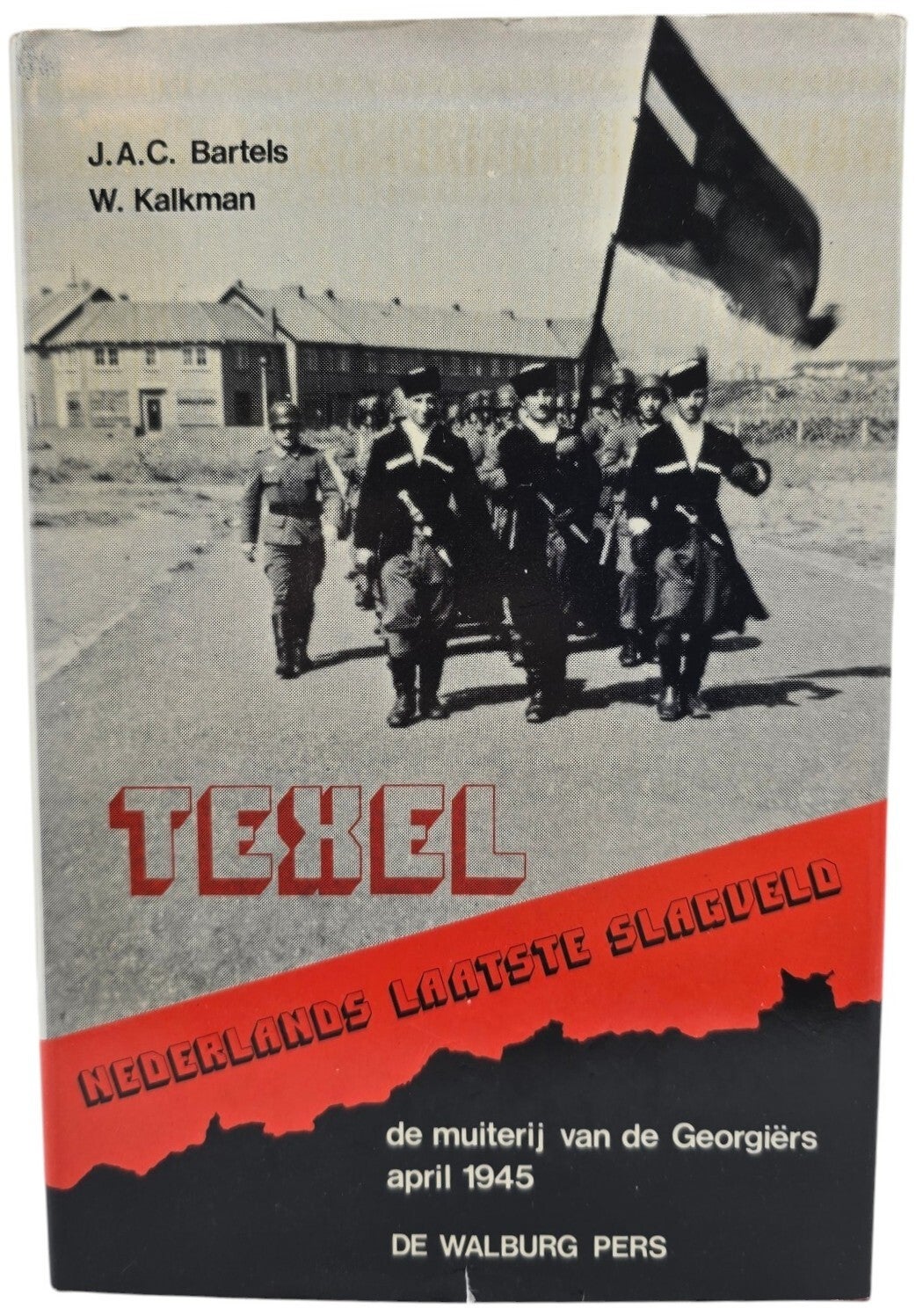
This book, Texel: Nederlands laatste slagveld – de muiterij van de Georgiërs april 1945, is written by J.A.C. Bartels and W. Kalkman. It focuses on the uprising of Georgian soldiers on the island of Texel during the final phase of the Second World War.
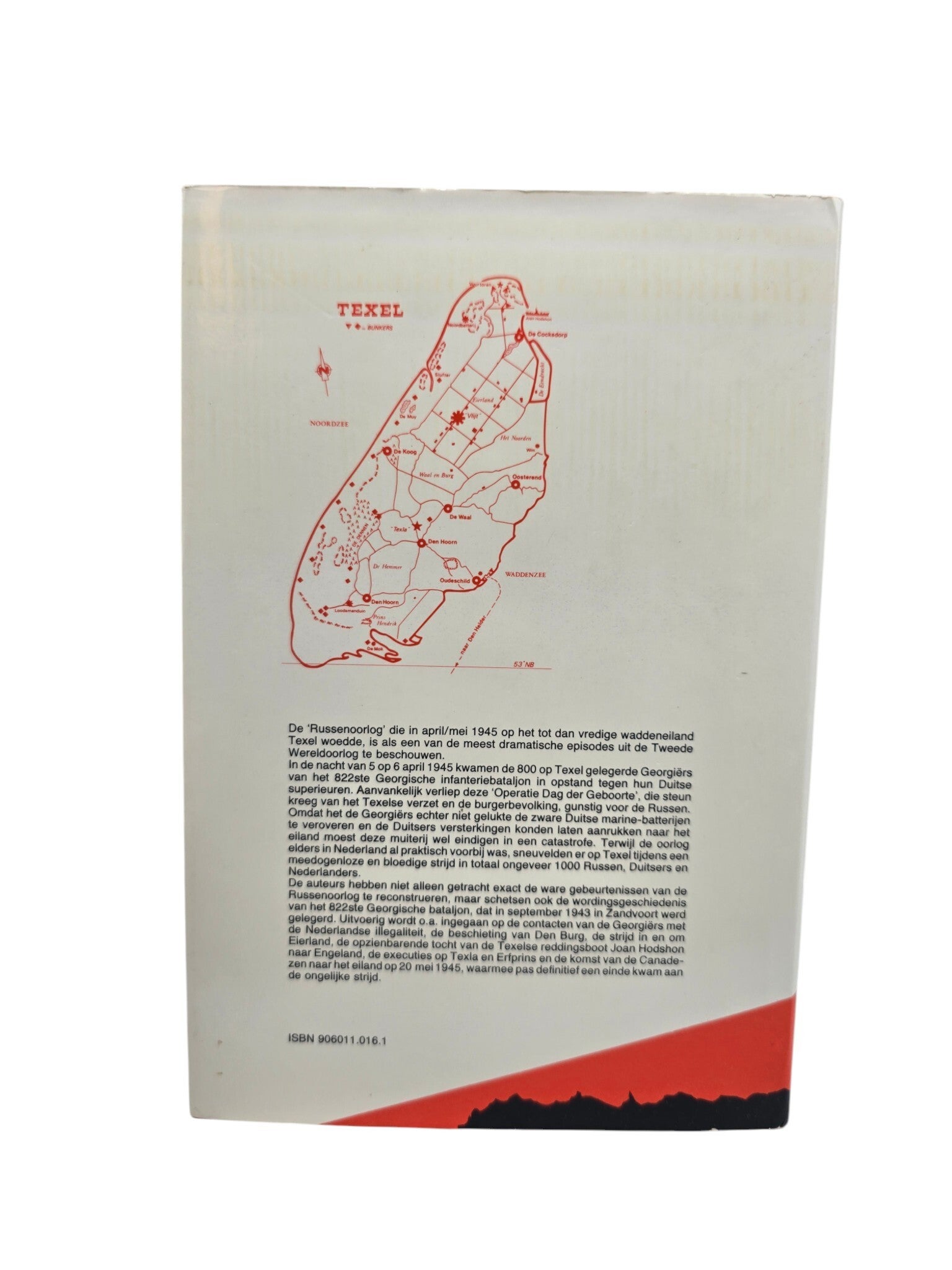
The study explores the so-called Georgian mutiny of April 1945, in which Georgian troops serving in the German army rebelled against their commanders. It describes the course of the fighting on Texel, the involvement of German forces, and the impact on the local population during what became one of the last battlefields in the Netherlands.
The book also places these events within the broader context of the closing stages of the war in Western Europe. It examines the complex position of foreign soldiers in German service and the chaotic conditions in the final weeks before liberation. As a result, it contributes to a deeper understanding of this lesser-known but significant episode in Dutch wartime history.
—
Origineel Nederlands Boek – Texel, J.A.C. Bartels & W. Kalkman (1980)
Dit boek, Texel: Nederlands laatste slagveld – de muiterij van de Georgiërs april 1945, is geschreven door J.A.C. Bartels en W. Kalkman. Het behandelt de opstand van Georgische soldaten op het eiland Texel tijdens de laatste fase van de Tweede Wereldoorlog.
Het boek beschrijft de zogenaamde Georgische muiterij van april 1945, waarbij Georgische troepen in Duitse dienst in opstand kwamen tegen hun bevelhebbers. Daarbij wordt ingegaan op het verloop van de gevechten op Texel, de betrokkenheid van Duitse eenheden en de gevolgen voor de lokale bevolking tijdens wat een van de laatste slagvelden in Nederland werd.
Daarnaast plaatst het werk deze gebeurtenissen in de bredere context van de slotfase van de oorlog in West-Europa. Het belicht de complexe positie van buitenlandse soldaten in Duitse dienst en de chaotische omstandigheden in de laatste weken voor de bevrijding. Daarmee levert het een waardevolle bijdrage aan het begrip van deze minder bekende maar belangrijke episode uit de Nederlandse oorlogsgeschiedenis.